
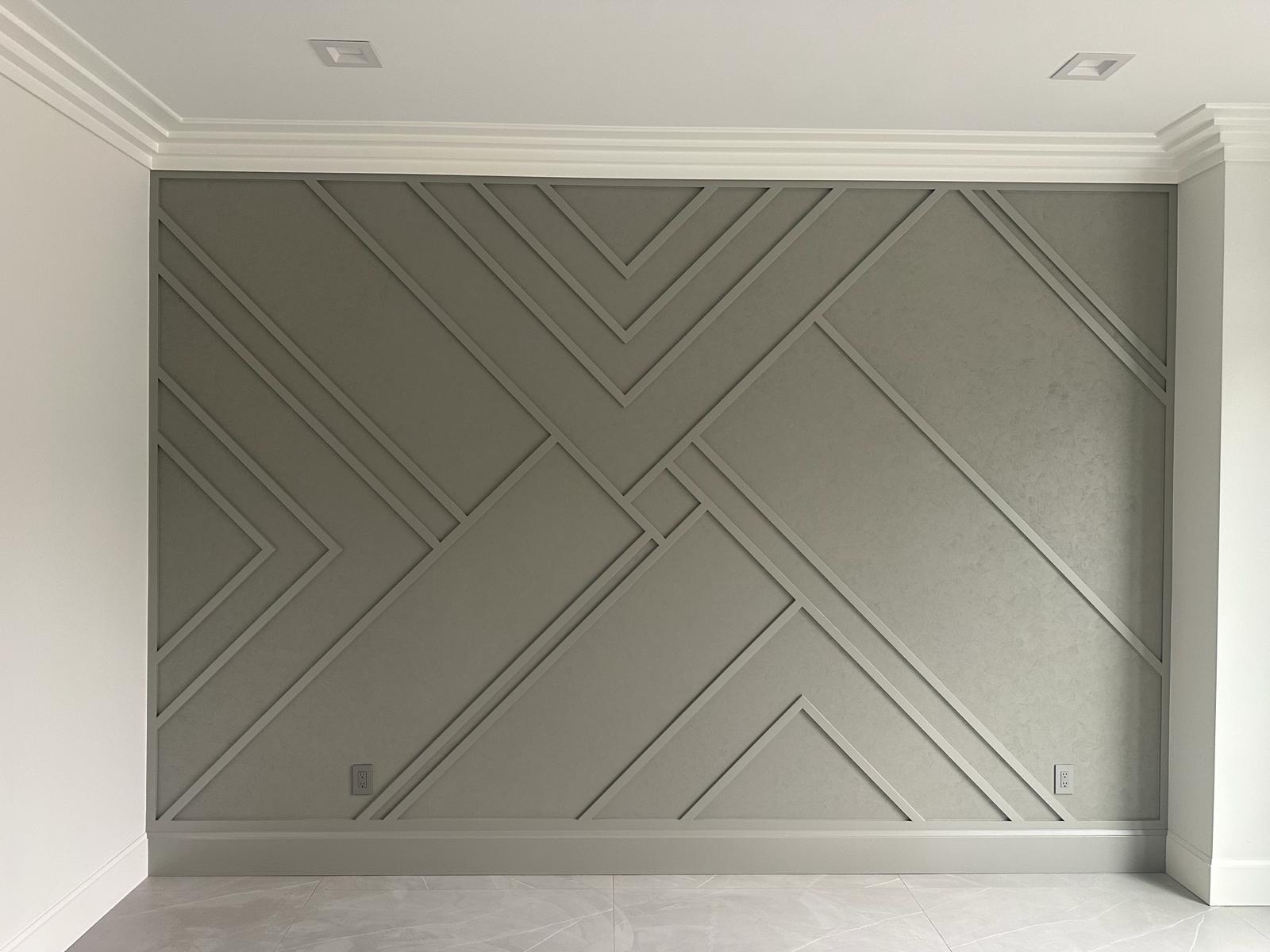
A wood accent wall is one of the most effective ways to add texture, warmth, and depth to any room. Depending on the type of wood and the installation pattern, you can achieve anything from a rustic, cozy feel to a sleek, sophisticated modern look.
Popular Wood Wall Styles
- Slatted Walls: These use vertical wood slats (like oak or walnut) installed with small gaps in between. They help ceilings look higher and offer acoustic benefits by reducing echo.
- Reclaimed Wood: Ideal for a rustic or industrial style. It uses boards from old barns or pallets, showcasing knots, color variations, and natural textures that tell a story.
- Geometric Patterns: This involves arranging wood pieces or MDF moldings in patterns like herringbone, chevron, or modern abstract designs to create an artistic focal point.
- Shiplap: Boards installed horizontally with a small groove between them. It’s the hallmark of the “modern farmhouse” style and can be left natural or painted dark for a more dramatic look.
Material Selection
The choice of material depends on your budget and desired maintenance level:
- Solid Wood: Offers the highest durability and natural beauty (oak, walnut, maple). It is the most expensive option.
- MDF or Plywood: Budget-friendly alternatives that are easy to paint and won’t warp over time. Birch plywood is popular for minimalist or “California casual” styles.
- Peel and Stick Panels: Perfect for renters or quick DIY projects, as they don’t require nails or heavy tools.
Design Tips
Contrast: The wall wood doesn’t have to perfectly match the floor. In fact, using a slightly lighter or darker tone creates a more attractive visual separation.
Placement: Choose the wall that serves as the natural focal point of the room, such as the wall behind the headboard or the TV.
Lighting: Wood absorbs light. If you use dark tones, ensure you have good ambient lighting or accentuate the texture with hidden LED strips to highlight the relief.